



Square Holes
- Aperture: 3–125 mm
- Rubber Thickness: 3–50 mm

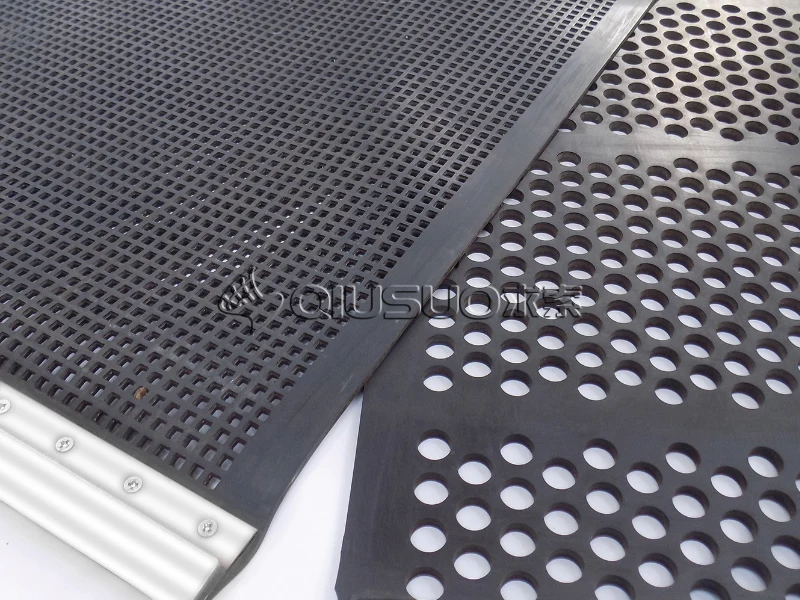
The rubber tension screen is manufactured from premium wear-resistant rubber with a Shore A hardness of either 40 or 60. It features wear-resistant tensioned edges on both ends and is specifically designed for use with traditional tensioned structure vibrating screen equipment. This type of screen mesh is tensioned and installed using clamping devices at both ends, providing excellent impact resistance, wear resistance, and anti-clogging performance. It is suitable for screening operations involving a wide range of dry and wet materials. QIUSUO offers customized solutions tailored to your unique requirements.
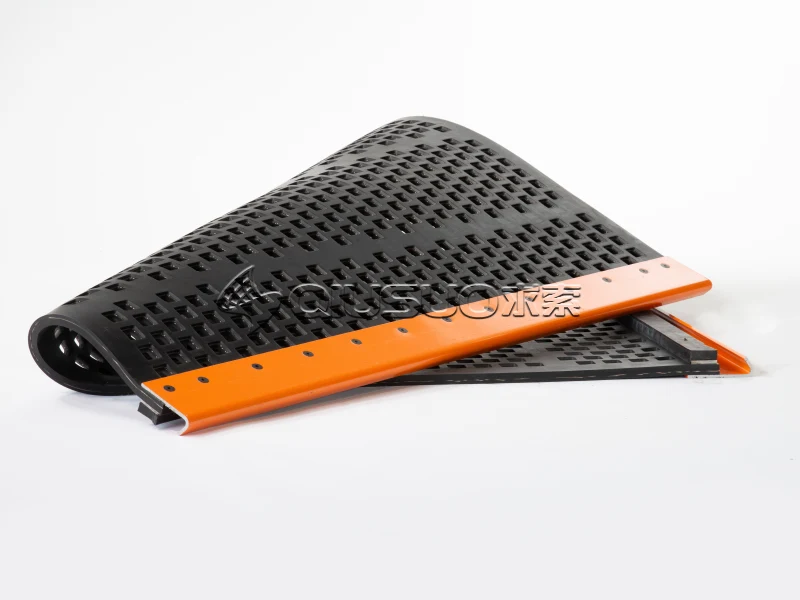
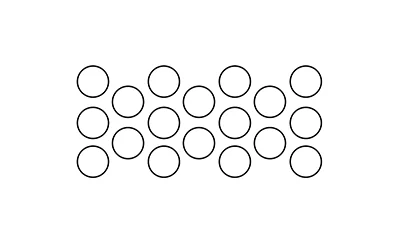
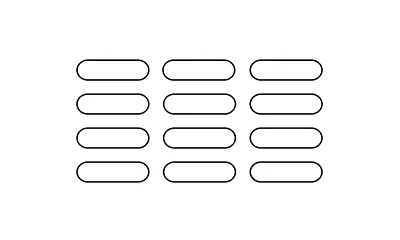
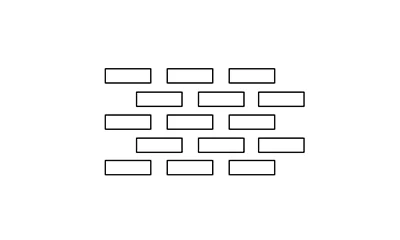
QIUSUO can assist in design based on application needs and requirements, leveraging extensive experience and expertise to produce high-quality, multi-specification rubber tension screen products with fast delivery times.
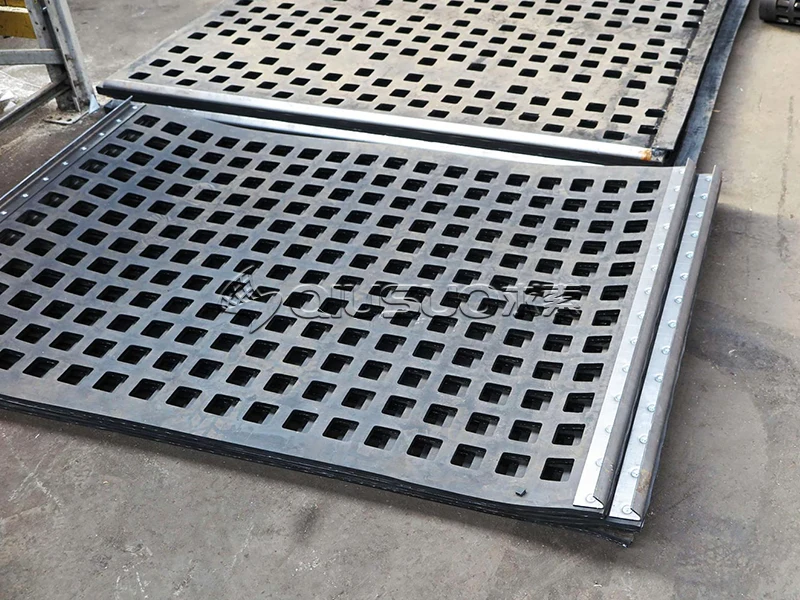
Through client cases, you can learn our excellent product quality and process in-depth, and feel the quality of rubber tension screen.
At QIUSUO, strict quality control covers every stage from raw material selection to finished product inspection, helping ensure reliable performance, good wear resistance, and long service life. With advanced production equipment and a standardized manufacturing process, we work to provide products that meet demanding screening requirements.
| Performance Indicators | Unit | Value |
| Hardness | Shore A | 42–46 |
| Tensile strength | MPa | ≥ 24 |
| Elongation at break | % | ≥ 700 |
| Tear strength | KN/m | ≥ 55 |
| Rebound resilience | % | ≥ 15 |
| Abrasion resistance | mm³ | ≤ 100 |
| Performance Indicators | Unit | Value |
| Hardness | Shore A | 62–65 |
| Tensile strength | MPa | ≥ 22 |
| Elongation at break | % | ≥ 600 |
| Tear strength | KN/m | ≥ 55 |
| Rebound resilience | % | ≥ 50 |
| Abrasion resistance | mm³ | ≤ 50 |
Compared to metal wire mesh and PU screen, rubber tension screens excel in screening and classifying larger particles. They are widely used in various industries, including ferrous and non-ferrous metallurgy (processing raw materials such as iron ore, manganese ore, lead-zinc ore, limestone, fluorite, blast furnace slag, coke, etc.), coal chemical processing, building materials, abrasive waste treatment, quarrying, etc.